Scam Alert: Oye Chor!
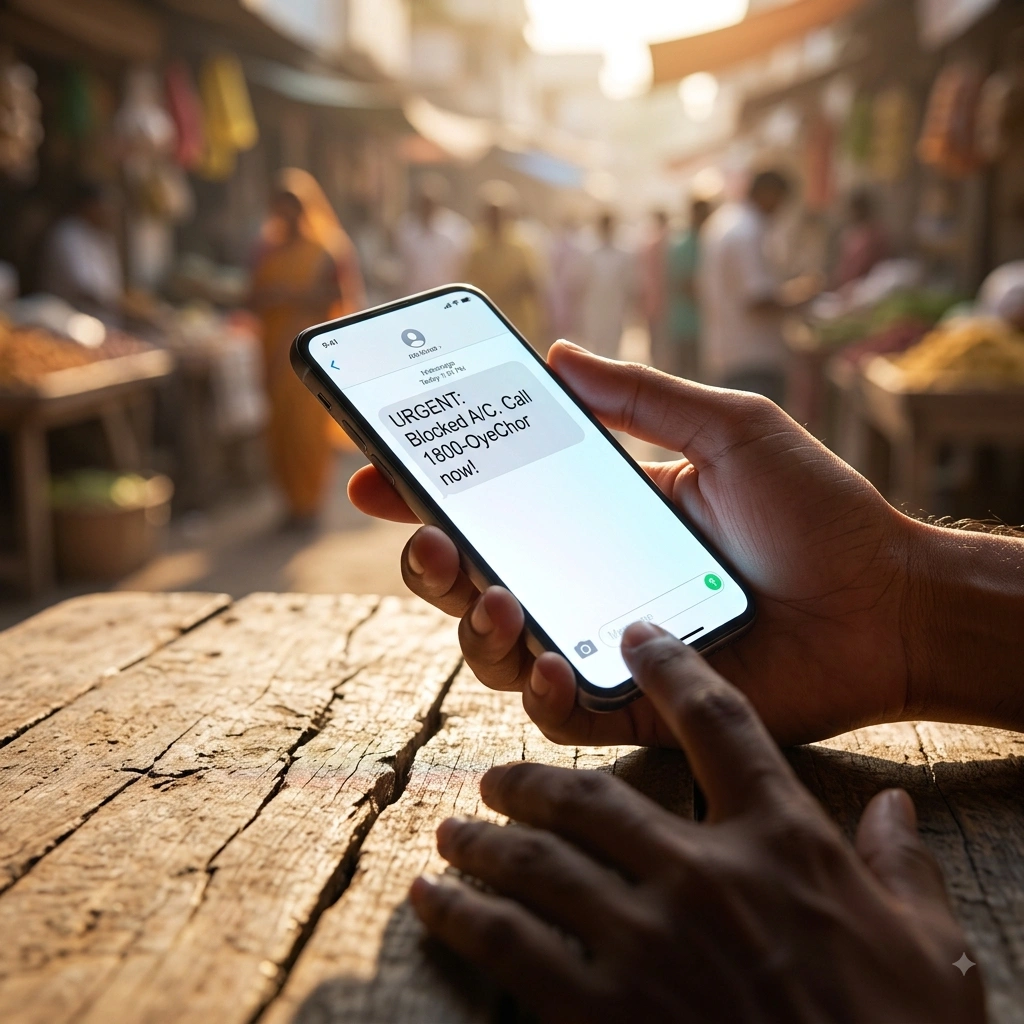
Today's thief does not need to break a lock. He only needs a phone call, a fake message, or an OTP. Learn how to protect your family's savings.
Mrs. Subba, a retired schoolteacher in Gyalshing, has always locked her doors carefully. She checks the gas before sleeping. Last winter, her phone rang. A polite voice, speaking fluent Hindi, told her that her bank account would be blocked in twenty-four hours unless she verified her details immediately. He knew her bank's name. He sounded official, even urgent, the way a real bank officer might sound. Frightened, she read out the OTP that arrived on her phone. Within minutes, forty thousand rupees, a good part of her monthly pension savings, was gone.
Mrs. Subba did nothing wrong by the standards of the world she grew up in. She simply did not know that this world had changed, and that today's thief does not need to break a lock. He only needs a phone call, a link, or a fake message that looks exactly like it came from her own bank. More people now do their banking on phones but it has also opened a new door for a different kind of crime.
Older people are often targeted the most, simply because banking apps and OTPs are still unfamiliar territory for them. But young people are not safe either. Students looking for a job or a loan can all be tricked by a message, too. This is not a sign that we are careless, but fraud today is designed to gain human trust and use it against us.
An OTP is the key to your account; would you hand over your house key to a stranger just because he says he is from the electricity department? No bank, office, or company will ever call and ask for your OTP, your full card number, or your password. This one sentence, if remembered, could prevent a large share of these losses.
Essential Rules for Digital Safety:
Perhaps, it is time we teach both our children and our parents, to guard information like they would guard a house key. Digital safety needs quiet vigilance and awareness, passed down the way we have always passed down our culture.
Have questions about this guide?
Our financial Sahayogis are ready to help you plan your family's financial goals in simple terms.




Recommended Guides
Handpicked articles to help you build long-term wealth.
 Financial Planning
The Government Dream Job…
Newer careers in digital marketing, tourism, and business offer high income but no pension. Learn how to build your own safety net.
 Smart Saving
Wedding Fund: A big fat Indian wedding…
A wedding lasts a day, but a loan can last years. Discover how early investment planning saves families from high-pressure debt.
 Smart Saving
The Price of Paradise
Tourism brings opportunity to local towns like Lachen, but rising local prices squeeze fixed-income families. Here is how to prepare.
Ready to take the first step?
We're here to help you start your investing journey.